
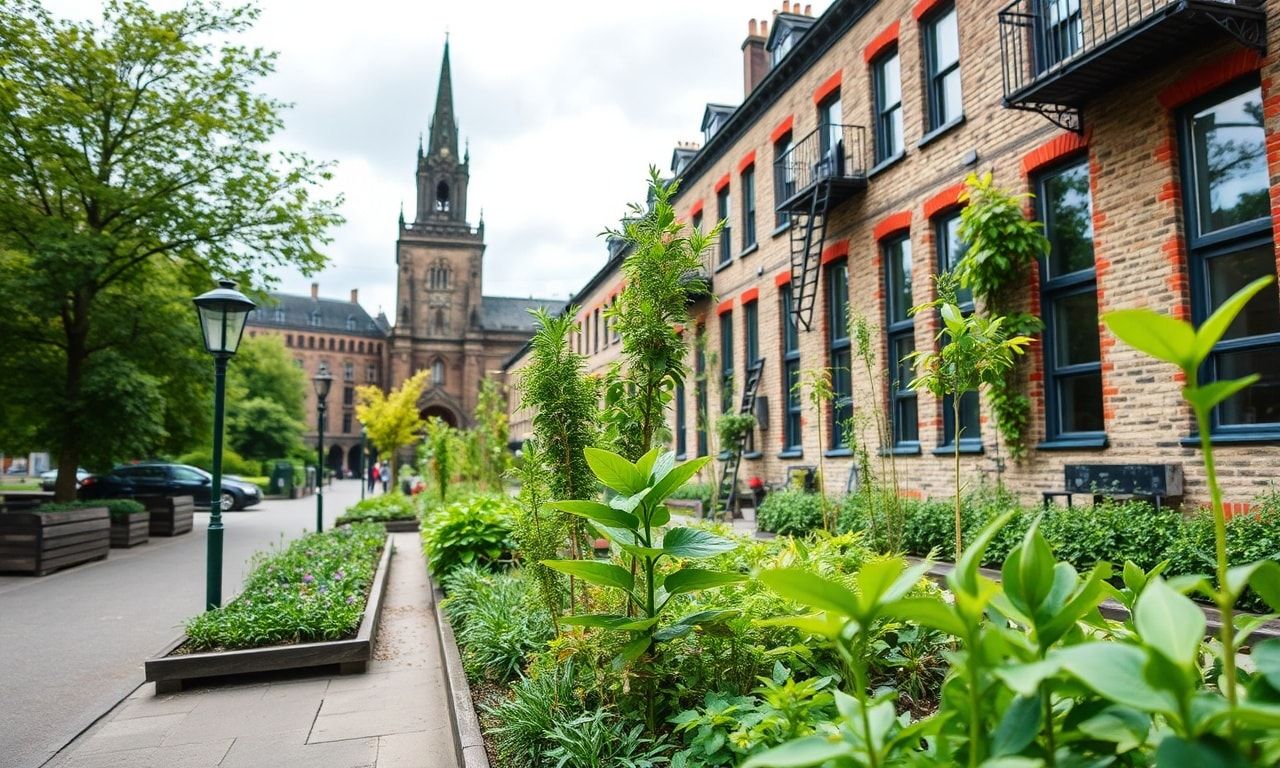
The Vision Behind Edinburgh’s Green Initiative
Edinburgh, the capital of Scotland, has long been celebrated for its rich history, cultural heritage, and stunning architecture. However, the city is now making waves for a different reason: its ambitious green initiative aimed at transforming urban living and setting a benchmark for sustainable cities worldwide. This comprehensive plan, spearheaded by the local government and supported by a coalition of environmental organizations, aims to reduce carbon emissions, enhance biodiversity, and promote sustainable practices among residents and businesses alike.
Key Objectives and Goals
The green initiative is built on several key objectives. Firstly, it seeks to reduce the city’s carbon footprint by 50% by 2030, a goal that aligns with the broader Scottish government’s targets. This will be achieved through a combination of renewable energy projects, improved public transportation, and incentives for businesses to adopt greener practices. Secondly, the initiative focuses on enhancing biodiversity by creating green corridors and urban parks, which will not only beautify the city but also provide habitats for local wildlife.
Another critical aspect of the initiative is the promotion of sustainable living among residents. This includes educational programs in schools, community workshops, and incentives for homeowners to adopt energy-efficient technologies. The city is also investing in waste management systems that prioritize recycling and composting, aiming to divert 70% of waste from landfills by 2025.
Innovative Projects and Technological Advancements
One of the standout projects under the green initiative is the development of a new district heating system powered by renewable energy sources. This system will provide sustainable heating and cooling solutions for thousands of homes and businesses, significantly reducing reliance on fossil fuels. Additionally, the city is exploring the use of smart technologies to monitor and optimize energy consumption, water usage, and waste management.
Edinburgh is also investing in electric vehicle (EV) infrastructure, with plans to install hundreds of new charging stations across the city. This move is part of a broader strategy to encourage the adoption of EVs and reduce air pollution. The city’s public transportation system is also undergoing a green transformation, with the introduction of electric buses and the expansion of bike lanes and pedestrian pathways.
The Role of Community Engagement
Community engagement is a cornerstone of Edinburgh’s green initiative. The city has launched several programs to involve residents in the planning and implementation of sustainable projects. For example, community gardens and urban farming initiatives are being established to promote local food production and reduce food miles. Residents are also encouraged to participate in tree-planting drives and clean-up campaigns to enhance the city’s green spaces.
Educational institutions play a crucial role in fostering a culture of sustainability. Schools and universities in Edinburgh are integrating environmental education into their curricula, teaching students about the importance of sustainability and equipping them with the skills to contribute to the green initiative. Community workshops and public forums are also held regularly to discuss the latest developments and gather feedback from residents.
Challenges and Future Prospects
Despite the ambitious goals and innovative projects, Edinburgh’s green initiative faces several challenges. One of the primary obstacles is securing the necessary funding to support large-scale infrastructure projects. The city is exploring various financing options, including public-private partnerships and grants from international organizations. Additionally, there is a need to address potential resistance from certain sectors, such as businesses that may be hesitant to adopt new regulations and practices.
Another challenge is ensuring that the benefits of the green initiative are equitably distributed across all communities. The city is committed to involving marginalized and vulnerable groups in the planning process to ensure that their needs and concerns are addressed. This includes providing targeted support and resources to low-income households and small businesses to help them transition to more sustainable practices.
Looking ahead, Edinburgh’s green initiative holds immense potential to transform the city into a model of sustainable urban living. The city’s commitment to reducing carbon emissions, enhancing biodiversity, and promoting sustainable practices sets a strong foundation for a greener future. As the initiative progresses, it is expected to inspire other cities to adopt similar measures, contributing to a global movement towards sustainability.
Government Policy News Update
For the latest updates on government policies supporting green initiatives, visit the government policy news update section. This resource provides comprehensive coverage of legislative changes and regulatory frameworks that are shaping the future of sustainable urban development.
Conclusion
Edinburgh’s green initiative is a testament to the city’s commitment to sustainability and innovation. By setting ambitious targets and involving the community in the planning and implementation process, Edinburgh is paving the way for a greener, more sustainable future. As the initiative continues to evolve, it is poised to become a model for other cities seeking to balance urban development with environmental stewardship.